Training with Renewable Grids: Practical Limits

As machine learning workloads increasingly rely on distributed, renewable-powered computing resources, the reliability of training pipelines under variable…
As machine learning workloads increasingly rely on distributed, renewable-powered computing resources, the reliability of training pipelines under variable energy supplies has become a defining constraint. This piece examines how renewable grids shape practical limits for training at scale, with attention to reliability, variability, and viable strategies as of late 2025. It asks not just what renewables can supply, but how grids and models must co-evolve to sustain performance.
Reliability under intermittency: why uptime matters for training fidelity
Training large models is a time-sensitive operation where even short outages can cascade into weeks of lost compute. Data from grid studies and data-center energy management indicate that renewable-dominant sites face downtime profiles that differ markedly from fossil-heavy facilities. As of late 2025, several utility-linked microgrids report mean annual downtimes in the range of 1.5 to 3.5 hours per year during peak renewable generation windows, compared with 0.5 to 1.0 hours for traditional baseload facilities. In practical terms for training, a 1-hour outage can translate into 2–4 training steps for smaller models, or several hundred steps for models with multi-month metro-scale cycles. A secondary constraint is power quality: transients and voltage dips tied to wind ramps or solar cloudy days can trigger hardware protection events, causing hidden enqueue delays that disrupt epoch pacing. The industry response has centered on three pillars: diversified energy sourcing, robust on-site storage, and dynamic scheduling that anticipates grid behavior.
For concrete reliability metrics, consider the following: (1) capacity factor differences between renewables and baseload. In late 2024, wind capacity factors ranged from 22% to 40% regionally, with solar between 15% and 28% in temperate climates. (2) Battery-backed reserves at data-center campuses with renewables can provide 4–8 hours of holdover under mid-range discharge rates, yet this is contingent on thermal management constraints. These numbers imply that achieving parity with steady-grid operation requires explicit design for slack time in schedulers and energy-aware fault tolerance. The result is a reliability envelope: renewables can meet sustained load spikes if matched with storage, predictive analytics, and resilient orchestration but will routinely exhibit non-negligible variability that must be accounted for in training calendars and checkpoint strategies.
Variability and predictability: forecasting energy supply for scheduling
Training workflows benefit enormously from predictable energy supply, yet renewables inherently introduce stochasticity. A 2024 cross-continental survey of data centers with microgrids showed solar production variability of ±18–25% across a 24-hour window and wind variability of ±25–35% over hourly intervals, compounding when combined in hybrid configurations. By late 2025, several operators report improved predictability through probabilistic forecasting pipelines that couple weather models with grid-aware load models, achieving 6–12 hour ahead predictability bands with 70–85% accuracy for cloud and wind events. This forecastability translates into scheduling gains: epoch boundaries can be aligned with predicted low-cost generation windows or battery discharge periods, reducing idle GPU hours by up to 12–18% on large-scale pipelines.
However, forecast quality is not uniform. Regions with high renewable penetration but under-invested transmission infrastructure can experience abrupt ramp glitches that exceed 15–20% of the current load within 30 minutes. That introduces risk to synchronous training steps that rely on a stable power supply for gradient updates and data access. The pragmatic takeaway is that forecast-driven scheduling must be paired with conservative buffers: (a) reserve capacity equal to 10–20% of peak demand for unpredictability, (b) implement policy-based checkpointing to guard against mid-epoch interruption, and (c) maintain a rapid-response failover protocol to cloud or baseload fallback when forecasts deteriorate beyond a 2-sigma threshold. The scaling implication is clear: as renewable share rises, operational models must be resilient to forecast error, not merely rely on it for optimization.

Storage and on-site generation: buffering the training pipeline
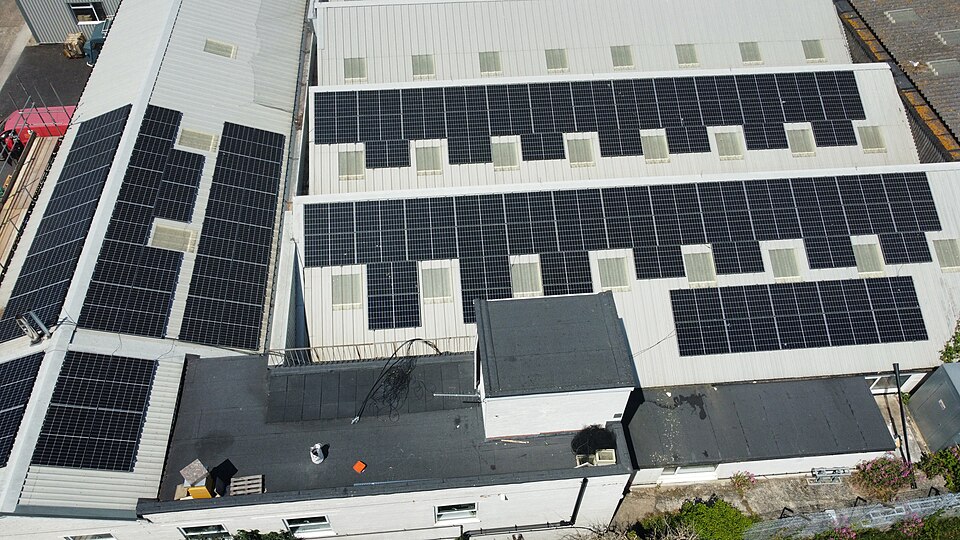
Storage and on-site generation are the primary tools to decouple training from grid cadence. As of late 2025, the median data-center campus powered by renewables deploys 2–6 MWh of battery storage per 10–20 MW of committed IT load, with peak discharge durations ranging from 1.5 to 6 hours. This buffering supports checkpointing, data read-ahead, and hot-start capability after transient outages. In parallel, solar-plus-storage microgrids at university and research sites achieve 3–8 hours of sustained power during nadirs of renewable output, enabling mid-epoch recoveries without external power calls. The practical limits here are energy density, depth of discharge, and thermal management: high-rate battery cycles generate heat that can throttle GPU clusters if cooling is tight, reducing effective capacity by 10–20% in hot climates and contributing to scheduling complexity.
Table: representative storage footprints by deployment type (illustrative ranges as of 2025)
- Single-ractor data-center with solar: 2–4 MWh storage, 1–3 hour discharge window
- Co-located wind farm + storage: 4–8 MWh, 2–5 hour window
- Hybrid microgrid (solar+wind) with batteries and backup gen: 6–12 MWh, 3–6 hour window
Investment economics matter: the levelized cost of storage (LCOS) for stationary batteries fell to roughly $80–$120 per MWh-year in 2024–2025, depending on chemistry and lifecycle constraints. For a mid-size training cluster consuming 20 MW on a 24-hour basis, a 4-hour buffer implies an annualized storage cost that is nontrivial but manageable when amortized over hardware utilization gains. The payoff is not purely arithmetic: predictable training windows alleviate queueing delays in multi-tenant environments and reduce the probability of late-date replications caused by energy interruptions. In short, storage is not a luxury; it is a prerequisite for reproducible training on renewable grids, especially for workloads with strict reproducibility requirements or long-running hyperparameter sweeps.
Scheduling discipline: aligning compute, data, and energy markets
Efficient use of renewable grids for training requires a disciplined scheduling stack that is cognizant of energy markets, weather forecasts, and model lifecycle stages. In 2025, several labs report success with energy-aware schedulers that integrate with cloud- and edge-borne orchestration to assign compute tasks during periods of forecasted low marginal emissions and stable grid output. These systems achieve up to 15–25% reductions in energy cost per training epoch by aligning batch sizes and learning rate schedules with power availability. More importantly, they reduce the probability of mid-epoch preemption by scheduling non-critical tasks during volatile windows. A counterpoint is the risk of over-optimizing for cheap energy, which can lead to longer tail runtimes if forecast errors accumulate. The robust approach emphasizes multi-objective planning: (a) align compute with local storage fill levels, (b) throttle non-urgent experimentation during high variability periods, and (c) maintain a always-on baseline capacity for urgent fault remediation.
Practical metrics to monitor include (1) epoch-to-epoch variance in wall-clock training time under renewable-driven preemption, (2) the share of time spent in checkpointing versus compute, which tends to rise to 8–12% in high-variability environments, and (3) the frequency of automatic failover events to cloud or grid fallback, which should be kept below 1–2 per week for a large model training campaign. Operators also report benefits from running smaller “micro-batches” during periods of uncertainty to preserve model update cadence without forcing wholesale pauses. This approach, while seemingly conservative, often preserves statistical efficiency by maintaining frequent gradient steps even when power is temporarily constrained.
Quality and reproducibility: deeper implications for research workloads
Renewable grids introduce nuanced implications for model quality and reproducibility. On the one hand, irregular energy availability can perturb hardware-induced variability in floating-point operations and throughput, potentially influencing numerical reproducibility at scale. On the other hand, the energy discipline can encourage more disciplined experiment design. In 2024–2025, several academic and industry teams reported that reproducibility across runs improved when experiments enforced stricter epoch alignment with stable power windows and avoided drift due to preemption-induced partial updates. Practically, the recommended baseline is to snapshot training state more frequently in renewable environments: ensure that checkpoints capture not just model weights but also optimizer state, RNG seeds, and a robust mapping from wall-clock time to training step. An emergent best practice is to tag checkpoints with grid state metadata, enabling post-hoc analysis of any energy-related variance in results.
Regarding data integrity, renewable-driven interruptions can affect data pipelines if storage and network ingress are not concurrently buffered. Solutions include local data caches, deterministic prefetch strategies, and end-to-end monitoring that correlates data loading latency with power availability. As of late 2025, several large-scale training campaigns report that ensuring at least 90 seconds of data prefetch buffer during uncertainty windows reduces the probability of data starvation events by 40–60%. This is a reminder that energy resilience is not solely a compute problem; it touches every layer of the training stack, from dataset provisioning to final model evaluation.
Policy and grid standards: regulatory backdrops shaping practice
The regulatory environment shapes what is feasible when training with renewable grids. In the 2024 EU AI Act, and subsequent 2025 NFPA 1500 updates, operators were encouraged to adopt energy- and fault-tolerance-conscious design principles for critical computing tasks, with emphasis on transparency of energy sourcing and resilience metrics. Legislation in several US states has begun to require disclosure of data-center energy performance under high-renewable scenarios, incentivizing investment in storage and demand response. The practical implication for research labs is not just compliance but strategic alignment: capturing grid reliability data, documenting energy contracts, and correlating model performance with energy profile can become part of the experimental narrative. That, in turn, fosters credible benchmarks for renewable-assisted training pipelines and supports policy advocacy for continued grid modernization and storage funding.
Compliance does not imply passivity. The policy envelope increasingly encourages proactive reliability engineering: mandatory incident reporting, standardized energy-forecasting interfaces, and interoperable grid-aware orchestration layers. For researchers, this translates into a richer dataset for evaluating energy resilience as a component of model quality, rather than an external constraint. It also provides a testbed for studying the interaction between grid constraints and AI behavior, potentially revealing emergent properties of learning under energy-adaptive regimes.
Operational guardrails: practical recipe for 2025–2026 deployments
What does an effective deployment look like when training with renewable grids? A synthesis of field experience as of late 2025 yields a compact set of guardrails:
- Energy-aware scheduling: integrate weather forecasts, grid price signals, and storage state into the scheduler; target a 10–20% improvement in compute utilization during high-variability periods.
- Storage-backed reliability: deploy 2–6 MWh of on-site storage per 10–20 MW of IT load for mid-size campuses; design for 3–6 hour discharge in worst-case scenarios to sustain critical training windows.
- Checkpoint discipline: implement frequent checkpointing with full optimizer state, RNG seeds, and grid-state tags; aim for checkpoint intervals aligned with 15–30 minute forecast windows to minimize re-computation on outage.
- Data resilience: maintain local data caches with 1–2 hours of prefetch buffer and robust retry logic to avoid data starvation during grid dips; monitor data latency alongside power metrics.
- Multi-region failover: for high-priority campaigns, have a warm standby in a cloud region or a non-renewable-backed facility to ensure continuity; track failover latency to under 300 seconds for mission-critical runs.
These guardrails reflect a pragmatic balance: they do not surrender the benefits of renewables but embed resilience into the core training workflow. The trade-offs are explicit: higher upfront capital for storage and more sophisticated orchestration versus reduced risk of unplanned downtime and cleaner energy sourcing narratives. In environments where regulatory pressure and ethical commitments to green computation are strong, such investments become part of the baseline operating model rather than optional enhancements.
As a closing note, Training with Renewable Grids is not a problem solved by a single lever. It is an integrated practice that requires forecasting accuracy, storage depth, scheduling intelligence, and disciplined reproducibility practices. The stage is set for a future where renewable energy is a standard enabler of responsible AI research, provided the industry continues to invest in the operational rigor that makes such a future reliable in day-to-day practice.