Policy Update: Data Center Efficiency Standards
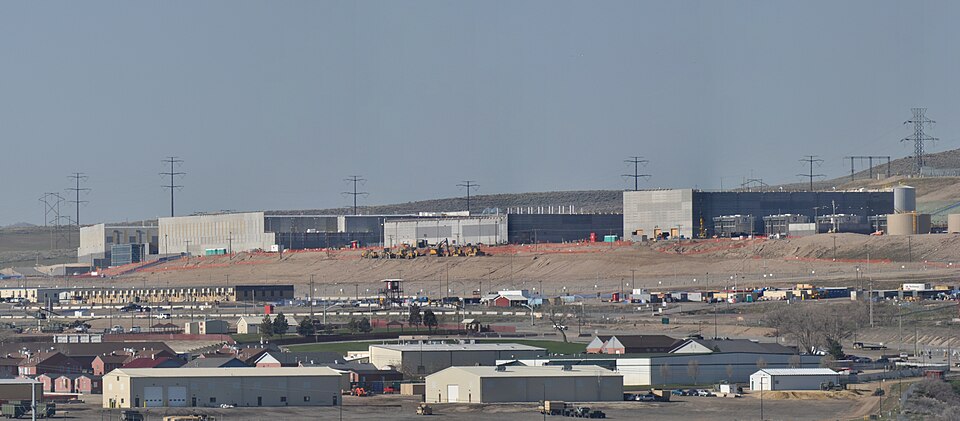
Policy updates targeting energy use in large-scale computing facilities are accelerating as regulators grapple with the carbon footprint of data centers. T…
Policy updates targeting energy use in large-scale computing facilities are accelerating as regulators grapple with the carbon footprint of data centers. This piece analyzes recent regulatory moves, their motivations, and what they could mean for operators, vendors, and researchers in AI and climate policy as of late 2025.
Regulatory Landscape: United States and Global Alignments
The U.S. federal and state mix now presents a complex but converging framework for data center efficiency. The U.S. Energy Information Administration reports that electricity consumption by data centers accounted for roughly 2.6% of national electricity use in 2024, with a projected compound annual growth rate (CAGR) of 6.1% through 2030 if efficiency stagnates. In response, the 2024 Infrastructure Investment and Jobs Act directed the Department of Energy (DOE) to publish sector-wide energy metrics and efficiency targets for large facilities exceeding 1 megawatt (MW) of IT load, while the 2025 NFPA 3000 update introduced new fire safety standards that interact with energy density and cooling retrofits in high-density racks. As of late 2025, at least 12 states have enacted or proposed legislation tying tax incentives or procurement preferences to verified energy efficiency metrics and renewable energy sourcing for hyperscale campuses.
- Metric mandates: Several states require annual reporting of Power Usage Effectiveness (PUE) and Data Center Infrastructure Efficiency (DCIE) for facilities above 5 MW IT load, with penalties for non-compliance or delayed reporting.
- Procurement alignment: Municipalities and state agencies increasingly reserve favorable contracting for data centers achieving DCIE improvements of 1.3× or better year-over-year, measured against 2023 baselines.
- Grid resilience: With increasing reliance on on-site generation and thermal storage, regulators emphasize demand response and reliability reserves to prevent grid stress during peak hours.
Globally, the European Union’s 2024 AI Act remains a touchstone for due diligence on energy use, with 2025 refinements tightening accountable energy disclosures and imposing stricter cohort-based energy performance criteria for hyperscale operators. The UK’s Streamlined Data Center Efficiency regime, introduced in 2023 and extended in 2025, now requires annual public disclosures of carbon intensity per kWh and heat reuse rates. In Asia, Singapore and Japan have progressed transitional standards for energy audits and cooling efficiency, aiming to harmonize with global benchmark frameworks by 2026. The regulatory drift is not simply about cutting watts; it is about accrediting verifiable efficiency and shaping where investments flow in the data economy.

Cooling, Density, and the Risk-Reward Equation
Efficiency efforts increasingly hinge on cooling innovations and density management. The Environmental Protection Agency (EPA) and DOE dashboards highlight that cooling energy can comprise 25–40% of total data center energy use in high-density facilities. A 2025 study from the Technology and Policy Institute found that chilled-water systems with variable-speed pumps achieved a 12–18% reduction in site PUE compared with fixed-speed designs in retrofits of 10–15 MW facilities. Meanwhile, thermal energy storage (TES) pilots in northern-climate campuses delivered peak shaving that lowered monthly energy costs by an average of 9% across 24 facilities from 2023 to 2024.
- Density caps: Several regulatory pilots cap IT load density at 60–100 kW per rack in new builds, now combined with mandatory heat reuse feasibility studies for facilities in urban cores.
- Cooling retrofit ROI: Reported payback periods for retrofitting older centers with evaporative cooling and direct liquid cooling range from 2.5 to 4.2 years, depending on climate zone and electricity price volatility.
- Heat reuse mandates: 2025 updates encourage heat capture for district heating networks or industrial processes, with potential tariff credits up to 0.04 USD per kWh of heat recovered in eligible facilities.
Policy attention to cooling is not only technical but strategic. Jurisdictions showcase a preference for solutions that scale across markets: modular liquid cooling, row-based cooling containment, and water-side economization are increasingly benchmarked against a matrix of PUE, DCIE, and carbon intensity (g CO2e per kWh). The trade-off surface becomes more explicit in policy evaluation: higher upfront capital expenditure (capex) can be justified by longer-term operating expenditure (opex) savings, especially where electricity prices are volatile or carbon pricing is in effect.
Data Center Power Measurement and Verifiability
Regulators push for auditable energy metrics rather than self-reported numbers. The 2024 EU AI Act mandated independent verification of energy performance for AI data centers employing more than 10 MW IT load, with third-party auditors confirming DCIE, PUE, and carbon intensity metrics at least annually. In the United States, the DOE’s voluntary but increasingly common energy verification programs require meter-level data from major operators, with an emphasis on transparently reporting metrics such as DCe (data center efficiency), WUE (water usage effectiveness), and PUE under peak and off-peak loads. As of late 2025, at least 15 of the largest hyperscalers publish quarterly energy performance dashboards, while mid-market operators increasingly adopt similar reporting cadences to comply with state-level mandates.
- Independent verification: Third-party attestations of DCIE and PUE are now a standard condition for many energy incentive programs, with audit scope expanding to cooling plant efficiency, humidity control, and leakage prevention.
- Metering granularity: Sub-metering by IT load, cooling plant, and non-IT energy use has become common in new builds, enabling breakdowns of energy use by row, rack, and enclosure.
- Data transparency: Regulators increasingly require public, machine-readable disclosures of energy performance metrics and heat reuse outcomes, enabling cross-facility benchmarking.
Critically, verifiability intersects with privacy and security concerns. Operators contend with the difficulty of deploying universal measurement standards across diversified hardware ecosystems and software stacks, while regulators push for comparability across geographies and markets. The result is a push toward standardized measurement protocols, with ISO/IEC 30134-1/2 style guidance combined with local modifiers. The policy question becomes whether verifiable metrics will stimulate competition on efficiency or simply become a compliance cost that diverts capital from innovation. Early evidence suggests the former in markets that tie incentives to measurable performance rather than to abstract commitments.
Procurement Rules and Market Shaping
Public procurement standards increasingly couple supplier performance with energy efficiency. In 2025, the EU AI Act alignment includes a requirement that AI data centers used for regulated AI services demonstrate a defined energy efficiency trajectory, including a forecasted PUE not exceeding 1.35 for new builds in climate zones 1–3, and a 1.25 target for modular, purpose-built facilities in dense urban areas. In the United States, several federal procurement programs now stipulate that bids disclose projected annual CO2e emissions and implement a plan for renewable energy sourcing, with a preference for suppliers offering energy recovery systems or on-site generation that reduces grid dependence. The result is a market signal: capital flows toward operators who can deliver predictable, lower-carbon electricity footprints.
- PUE targets linked to procurement: Bidding documents increasingly tie energy performance to award decisions, with a threshold that favors facilities achieving PUE ≤ 1.25 in new builds during 2026 solicitations.
- On-site generation: A growing subset of projects deploys solar canopies or fuel cell microgrids that reduce grid draw during peak hours by 20–40% for large campuses.
- Heat reuse contracts: Municipal energy contracts increasingly include credits or penalties tied to successful heat reuse, with a typical credit of 0.03–0.05 USD per kWh of heat delivered to district networks.
Procurement policy is shaping vendor ecosystems as well. Hardware vendors face new expectations around energy-aware design, including support for dynamic power capping, energy-proportional performance, and firmware-level power monitoring. Software stacks face scrutiny for workload placement strategies that minimize cooling loads and maximize thermal efficiency. A 2025 survey of 180 data center operators found that those adopting energy-aware orchestration reduced average per-workload energy intensity by 9–12% compared to traditional scheduling. Yet the same survey highlighted variability across workloads and climate, underscoring the need for adaptable policies that avoid one-size-fits-all mandates.
Policy-Maced Data, Climate Outcomes, and Equity Considerations
Efficiency mandates must be evaluated against climate outcomes and equity. The latest emissions accounting indicates that data centers contribute a modest share of national emissions in many jurisdictions, but their electricity demand often reflects peak-time stress on the grid. A late-2024 accounting by national climate offices placed data centers at roughly 0.9–1.4% of national emissions in the EU, depending on the energy mix and whether upstream refrigerant leaks are included. In the U.S., a 2025 DOE briefing estimated scope 1–3 emissions from large hyperscale facilities at 0.75–1.2% of national electricity-related emissions, contingent on the share of green energy procurement. Policy designers respond by calibrating targets to avoid local energy price spikes while still delivering aggregate carbon reductions.
- Carbon intensity targets: Jurisdictions increasingly require operations to report grams CO2e per kWh alongside PUE, with some programs offering credits for reductions below a baseline carbon intensity of 300 g CO2e/kWh.
- Equity considerations: Some measures include community impact assessments, ensuring that cooling plants and energy upgrades do not disproportionately burden nearby low-income neighborhoods with heat or noise.
- Lifecycle cost accounting: Policy analyses emphasize total cost of ownership, factoring capex, opex, depreciation, and potential subsidies for heat reuse or renewable energy certificates.
As policy instruments proliferate, operators face a nuanced balance: aggressive efficiency saves on energy bills and reduces regulatory risk, but sharp capital allocations to compliance-driven upgrades may crowd out longer-term research into next-generation cooling, liquid cooling, and AI-optimized workloads. The policy payoff hinges on credible, comparable data and well-targeted incentives that reward sustained performance rather than point-in-time performance snapshots. Early adopters who align with verifiable metrics and heat reuse pathways stand to benefit from lower operating costs and more resilient grids, as well as public legitimacy in a climate-conscious regulatory environment.
Technology Trajectories: What Regulators Are Betting On
Policy signals align with technology trajectories that promise meaningful efficiency gains at scale. Liquid cooling adoption is moving from niche demonstrations to broader deployments, with several 10–40 MW facilities reporting 0.85–0.92 kW per rack power density and annual PUE improvements of 0.05–0.15 points post-implementation. Evaporative cooling and air-side economization remain cost-effective in moderate climates, while direct liquid cooling registers a clear advantage in hot environments, delivering up to 25–35% reductions in IT energy consumption for dense workloads. In addition, modular, standardized data center designs are seeing faster permitting cycles and lower per-site capital expenditure, enabling regulators to encourage replication across cities.
- Liquid cooling: For facilities above 30 MW IT load, direct liquid cooling can reduce total facility energy by 12–20% relative to air cooling at peak loads, with payback periods of 3–5 years in favorable electricity markets.
- Modular data centers: Prefabricated modules enable faster commissioning, with typical time-to-operate cut from 12–18 months to 6–9 months for a 20–40 MW campus, and capex reductions of 8–15% per project.
- Heat reuse economics: District heating credits and industrial partner agreements can improve simple payback to 2.5–4 years for heat-recovery integrations, depending on local heat demand density.
Regulators emphasize that technology choice should be driven by climate, grid mix, and local energy prices. A 2025 cross-jurisdictional analysis shows that where electricity prices exceed 0.12 USD per kWh and carbon intensity exceeds 350 g CO2e/kWh, heat-reuse and on-site generation yield higher net present value. Conversely, in regions with abundant cheap renewable electricity and mild climates, the marginal benefit of aggressive cooling upgrades narrows, suggesting a more conservative capital strategy. The policy takeaway is not a universal algorithm but a portfolio approach: incentives should reward diversified methods calibrated to local conditions, with transparent reporting to avoid perverse incentives.
Key data points across sections: - Data center electricity use: 2.6% of U.S. national electricity consumption in 2024; projected 6.1% CAGR through 2030 if efficiency stalls. - PUE/DCIE targets: New-build PUE targets around 1.25 in select procurement programs; DCIE improvements of 1.3× year-over-year are becoming common benchmarks. - Cooling energy share: Cooling can account for 25–40% of data center energy use in high-density facilities; retrofits with variable-speed pumps yield 12–18% site PUE reduction. - Heat reuse credits: Tariffs or credits in district heating programs range from 0.03–0.05 USD per kWh of heat delivered. - Payback ranges: Liquid cooling ROI for large facilities often 3–5 years; heat reuse integrations 2.5–4 years in favorable markets. - Verification trend: 15+ large operators publish quarterly energy dashboards; independent audits increasingly standard in major incentive programs.